IOCipher lives! encrypted virtual file system for Android
Posted on May 17, 2012
| Hans-Christoph Steiner
Nathan and I just got the first complete test of IOCipher working in the IOCipherServer/SpotSync app. We created a filesystem sqlite.db file, then mounted it and got all the files via HTTP. In the test suite, I have lots of operations all running fine and encrypting! The core idea here is a java.io API replacement that transparently writes to an encrypted store. So for the most part, just change your import statements from:
[Read More]
<!--:en-->Bye, bye, BBM! Facebook Allows Verifiable Encrypted Mobile Messaging for Android and iOS; Mobile Revenue Threatened?<!--:-->
Posted on May 16, 2012
| n8fr8
Yes, yes, we are trying to get in on all of the Facebook pre-IPO buzz. Fortunately, the headline is true – through
Facebook’s support for open-standards messaging, our secure mobile messaging app, Gibberbot for Android, can be used to communicate securely with any other friend on Facebook who is ALSO using a secure messaging app. Whether it is Gibberbot, ChatSecure for iOS, Adium (Mac), Pidgin (Windows/Linux), or one of the many secure messaging apps that support the Off-the-Record encryption capability, Facebook allows encrypted messaging between mobile and desktops alike.
[Read More]
Cross-Domain calling, or “toll-free long distance VoIP”
Posted on May 4, 2012
| lee
In a standard OSTN configuration, the Fully Qualified Domain Name (FQDN) of the server running Freeswitch is a core dependency to operate the service. For example, the domain ostel.me was first configured as a DNS record, a server was bootstrapped with ostel.me as the local hostname and a Freeswitch cookbook was run using the Chef automation system. Because the domain was configured both in DNS and locally, the cookbook has enough information to automatically build an operational OSTN node.
[Read More]
Orbot Your Twitter!
Posted on May 2, 2012
| n8fr8
In some ways, Twitter is the perfect application to run over the Tor network. It works with small bits of data, it is asynchronous, works naturally in a “store and forward” queue model, and in general, has a decent amount of default security built-in through HTTP/S support and OAuth. Compared to the problem-child of the open web, which often involves large websites, streaming video, flash embeds, and malicious javascript, Twitter is a nearly perfect candidate for use over a secure, anonymous (but sometimes high latency) network.
[Read More]
Mobile mesh in a real world test
Posted on May 2, 2012
| Hans-Christoph Steiner
Nathan, Mark, Lee, and I tried some OLSR mesh testing during the May Day protests and marches. We were able to get 4 devices to associate and mesh together, but not without some trials and travails. Two pairs of devices setup two separate BSSIDs, so were on separate networks. We turned them all off, then associated them one at a time, and then they all got onto the same BSSID and olsrd started doing its thing.
[Read More]
Singing and Dancing for Encryption
Posted on April 19, 2012
| mark
If you see me dancing or signing with my phone in my hand, I may not just be having a great time, but also creating an encryption key. Part of the issue with security is that it can often be difficult to implement or an added step in what users want to be an easy and seamless process. What if we can make secure and private communications fun and easy?
[Read More]
User scenarios to guide our crypto development
Posted on April 14, 2012
| Hans-Christoph Steiner
At Guardian Project, we find user-centered development to be essential to producing useful software that addresses real world needs. To drive this, we work with user stories and scenarios as part of the process of developing software. One particular development focus is the Portable Shared Security Token (PSST) project, which aims to make it easy to use encryption across both mobile and desktop computers, as well as keep the stores of cryptographic identities (i.
[Read More]
How We Help
Posted on April 10, 2012
| n8fr8
While we think that a secure, privacy-enhanced mobile phone is a good thing for just about anybody going about their daily lives, we like to also consider the extreme cases, where this technology might change the course of someones life.
The Economist covered our work with WITNESS on Secure Smart Cameras, and the “Future of Protest Video”.
Below are a few ideas of how Guardian phones might be used in the real world.
[Read More]
Transparent encrypted virtual disks for Android (we call it IOCipher)
Posted on April 3, 2012
| Hans-Christoph Steiner
When using phones, laptops, computers, etc. it feels like a private experience, as if our screen was the same as a piece of paper, and when that paper is gone, then no one can see it anymore. Digital media works very differently. While the user interface portrays the deletion of files as very final, for someone with the right tools, it is actually not hard to recover deleted files. Also, digital information takes up so little space, we now regularly carry vast amounts of information in our pockets.
[Read More]
Knight News funding of SecureSmartCam = a #WIN for open-source mobile security
Posted on March 29, 2012
| n8fr8
Along with our partner WITNESS, we’ve entered our SecureSmartCam project into the Knight News Challenge, and we need your support to get to the next round.
Here’s a bit more about the challenge:
The Knight News Challenge, an international media innovation contest, is evolving – and will be offered three times, with three different topics. The first challenge will be centered on networks, and will accept applications Feb. 27 – March 17.
[Read More]
Call My Email
Posted on March 22, 2012
| mark
What if you could call me directly through my email? No exchanging of phone numbers or searching for handles on Skype. Just plain and simple email. Now what if we can make that phone call as secure as it is easy. That’s the goal of what we’re doing here at Open Secure Telephony Network (OSTN).
The internet is already structured to be able to do this. That’s why I can have all of my emails point to one email box if I want to.
[Read More]
Acrobits Groundwire – OSTN supports iPhone
Posted on March 21, 2012
| lee
The Guardian Project develops open source software primarily for the Android platform but we strive for security by design to be a part of all platforms. With OSTN, there are two major components. The the first is the server, which operates as the primary user directory and call switch. The other is the client, which is the program you interact with to send and receive calls.
While the Apple App Store forbids distribution of GPL licensed software from their service, the underlying protocols used by OSTN are open, so even iPhone developers may implement them in a proprietary client application without breaking any intellectual property laws.
[Read More]
On Verifying Identity Using Cryptography
Posted on March 19, 2012
| Hans-Christoph Steiner
One of the most important uses of cryptography these days is verifying the identity of the other side of a digital conversation. That conversation could be between two people using OTR-encrypted IM, a web browser showing a bank website, a Debian Developer uploading a package to the Debian build server, an ssh client logging into an ssh server, and on and on. In all of these cases, cryptography is used to ensure that the software is indeed receiving replies from the expected entity.
[Read More]
Adventures in Porting: GnuPG 2.1.x to Android!
Posted on March 15, 2012
| Hans-Christoph Steiner
PGP started with Phil Zimmerman’s Pretty Good Privacy, which is now turned into an open IETF standard known as OpenPGP. These days, the reference OpenPGP platform seems to be GnuPG: its used by Debian and all its derivatives in the OS itself for verifying packages and more. It is also at the core of all Debian development work, allowing the very diffuse body of Debian, Ubuntu, etc developers to communicate and share work effectively while maintaining a high level of security.
[Read More]
Our new F-Droid App Repository (out of date!)
Posted on March 15, 2012
| n8fr8
Update: this blog post has been changed to reference our new FDroid repository at https://guardianproject.info/fdroid. If you are still using the old one originally described here which has the URL https://guardianproject.info/repo, you should switch to the new repo as soon as possible!
For all of you out there looking for a safe way to find and download apps outside of the Play Store (aka Android Market) or random, sketchy third-party app stores and file sharing sites, then your wait is over:
[Read More]
VoIP Survey Results of NGOs, Human Rights Groups and Activists
Posted on March 7, 2012
| n8fr8
In November 2011, 25 individuals were surveyed using an online form, representing typical end-users, global journalists, activist and human rights organization perspectives (Thank you to all the participants!). The goal of the survey was to establish a baseline understanding of the types of tools and expectations our target user community has around making “telephone calls” over the internet, otherwise known as Voice over Internet Protocol (VoIP).
This survey is part of our work on the Open Secure Telephony Net (OSTN).
[Read More]
ObscuraCam v2 ALPHA (with video!)
Posted on March 2, 2012
| n8fr8
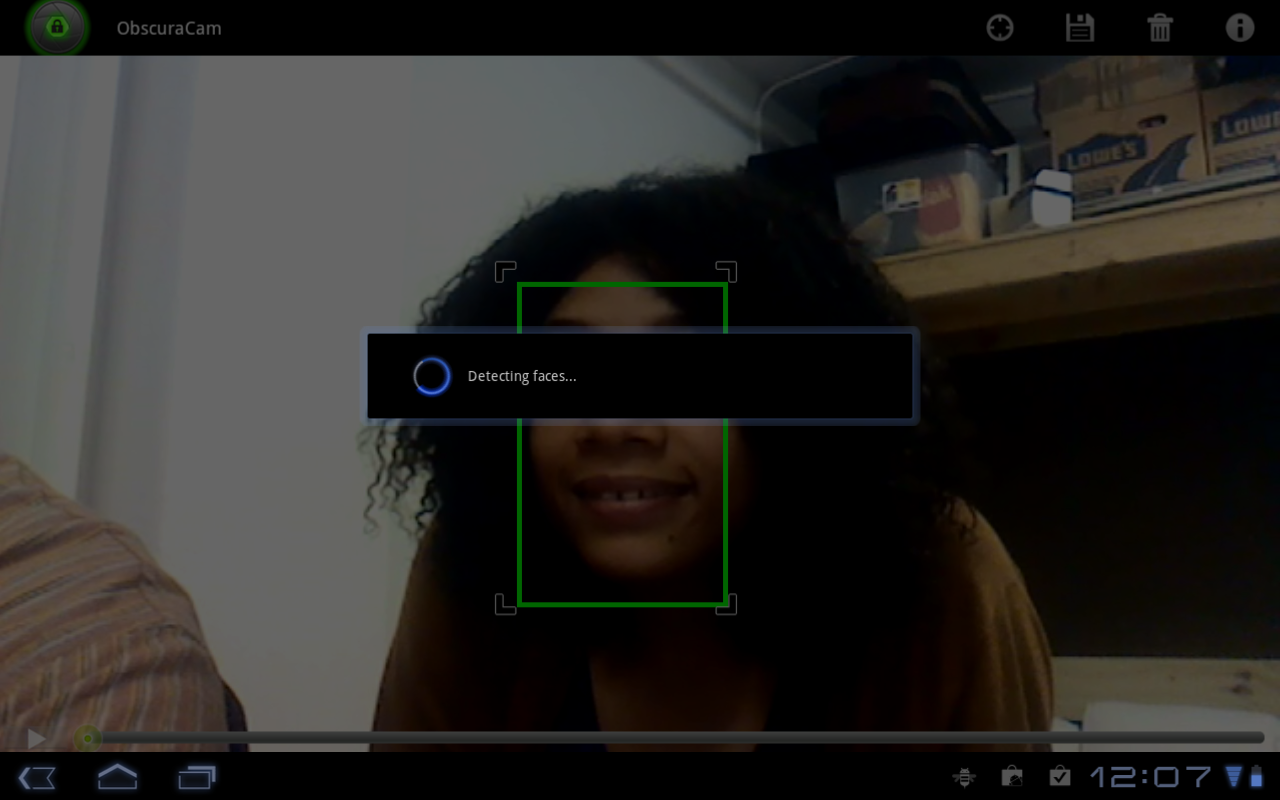
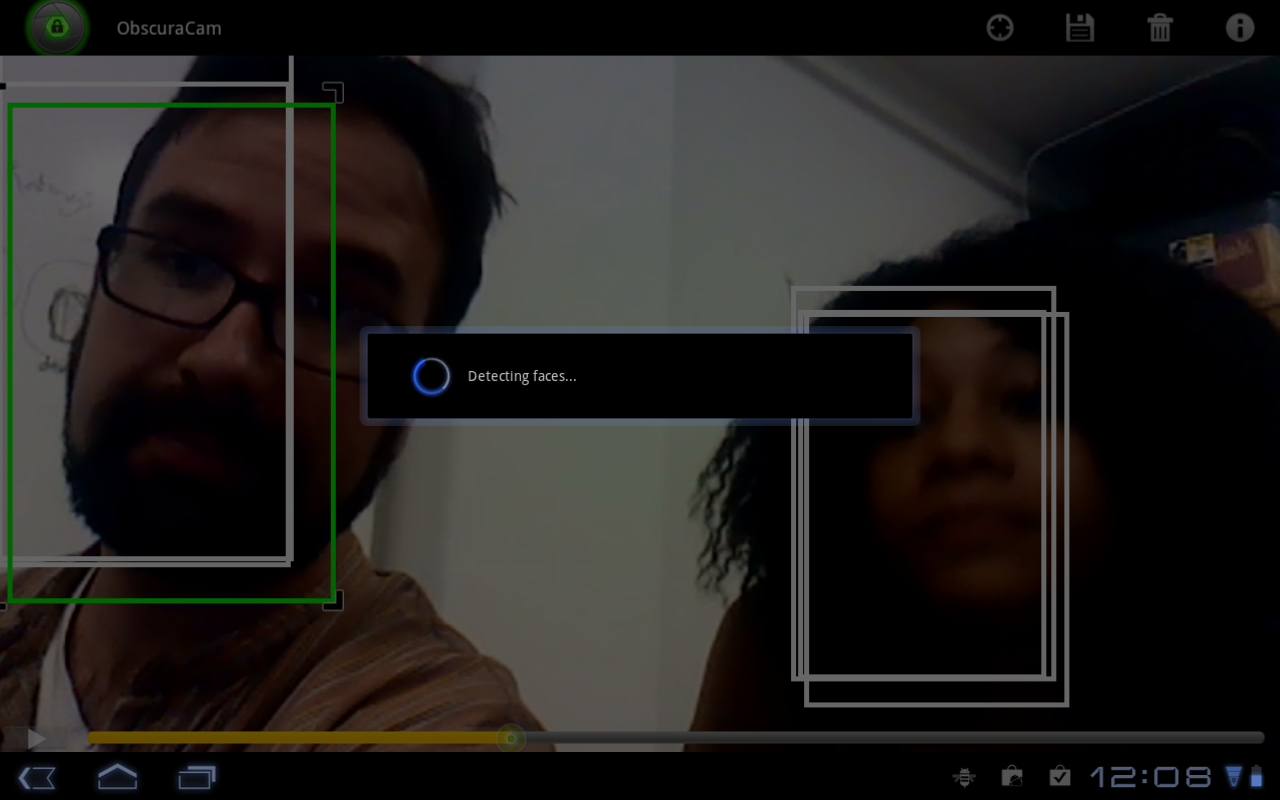
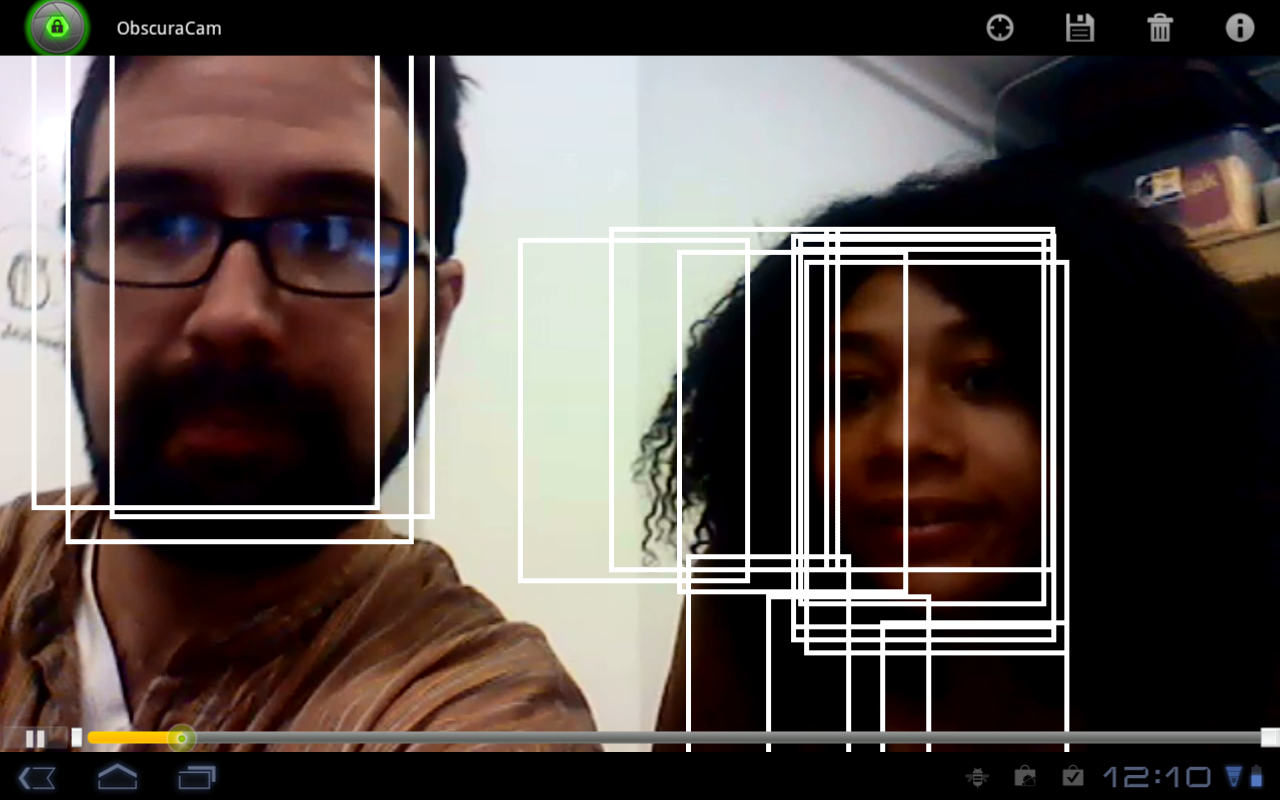
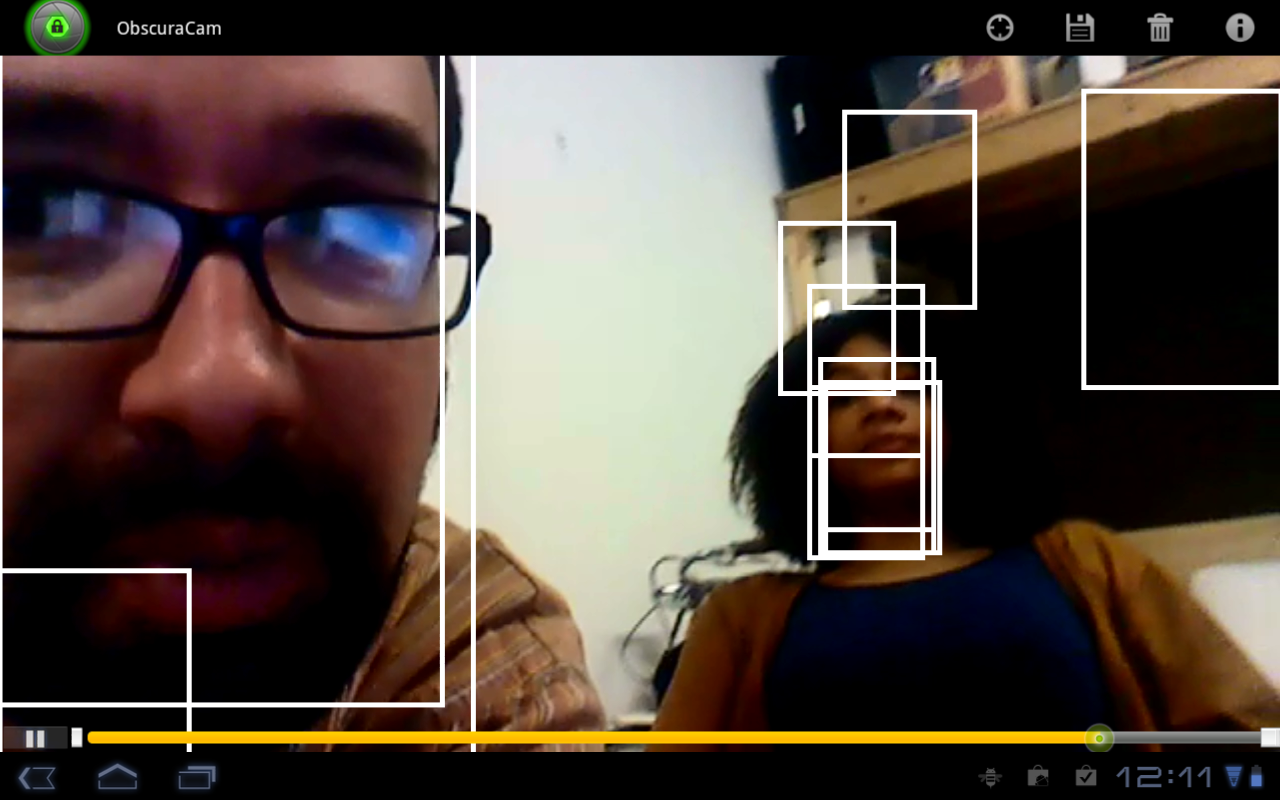
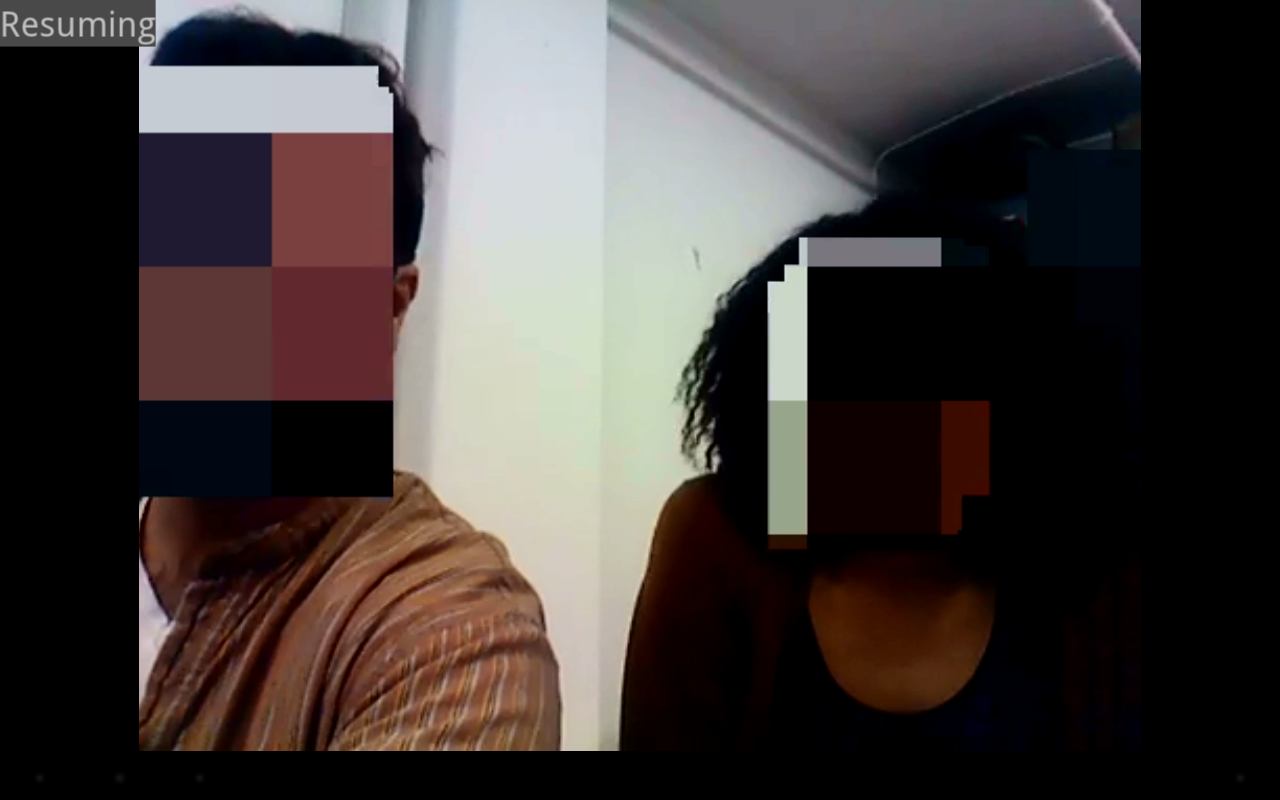
We’ve been making exciting progress with our work on ObscuraCam, part of the SecureSmartCam project with our partner WITNESS. The biggest jump forward is the addition of video support, including automated face detection, pixelization and redaction.
Screenshots below, and soon a video below (also at: http://youtu.be/9hi4c_DCrkw)
Source code branch is here: https://github.com/guardianproject/securesmartcam/tree/obscurav2
Latest ALPHA test build at: https://github.com/guardianproject/SecureSmartCam/ObscuraCam-2.0-Alpha-2.apk/qr_code
How many ways to store 5 numbers?
Posted on February 23, 2012
| Hans-Christoph Steiner
At the core of all software that aims to be secure, private and anonymous is encryption, or as I think of it, amazing math tricks with really large numbers. These really large numbers can serve as a token of identity or the key to information locked away behind the encryption math. There are a number of different encryption methods commonly used based on different mathematical ideas, but they all rely on people managing sets of really large numbers, usually known as keys.
[Read More]
Free SIP Providers with ZRTP support
Posted on February 22, 2012
| lee
This post is part of a series on our work researching the Open Secure Telephony Network. After you have CSipSimple installed on your mobile handset, you will need a place to register a SIP username so you can contact others. The fastest way to get started with this is to use one of a handful of free SIP providers. I like the Ekiga free SIP service.
The only drawback to this service is the userbase is large enough that the namespace of easy to remember words is frequently occupied.
[Read More]
Open Source SIP Client for Android
Posted on February 22, 2012
| lee
The first step in the Open Secure Telephony Network (OSTN) is a client. We can’t make a phone call without a phone. In this case there are three primary goals and a number of optional features. The primary goal is an application which speaks the SIP protocol for signalling. It must also speak the ZRTP protocol for peer to peer encryption key exchange. Finally the client must have source code freely available with a license that allows free redistribution.
[Read More]